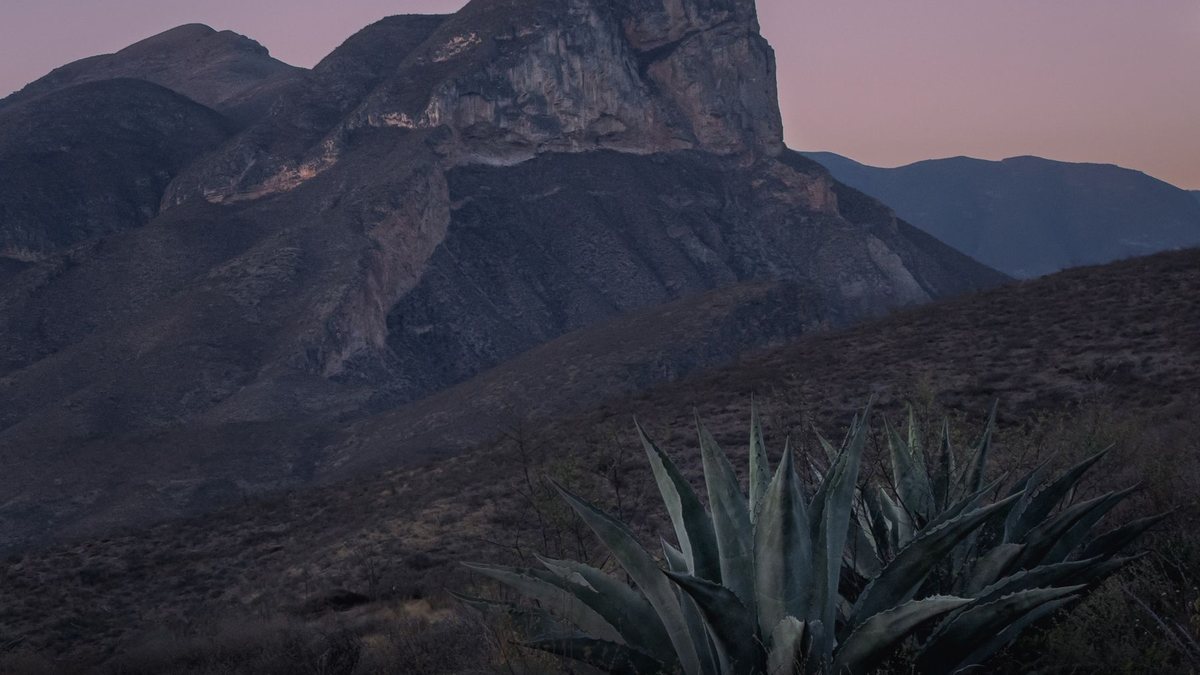
Espadín is farmed in rows. The agaves in this post mostly are not. Mezcal makers call them silvestres, wild agaves: plants that grow on their own on rocky hillsides and have to be found, cut and carried down by hand. Some are now grown from seed and planted back into the wild, which makers call semi-wild. There is no legal definition of either word, so it pays to know the plants themselves.
Why they take so long
Every agave grows for years, stores sugar in its heart, and is harvested once. Wild agaves are slow at this. Tobalá takes 10 to 15 years. Cenizo takes 8 to 15. Arroqueño, a huge agave, takes about 20 to 25 years, and tepeztate can take 25 years or more. Compare that with espadín's six to ten.
Many of them are also small or low in sugar. One producer in Puebla says it takes about 15 kilos of tobalá to make a single liter of mezcal. Long growth, little spirit per plant, and hand harvesting on steep ground: that is why a wild-agave bottle costs more.
The four to know
- Tobalá (Agave potatorum). A small agave that grows only from seed, often in the shade of trees. It is famous for a soft, fruity, floral style. Try Xicaru Tobalá from Santiago Matatlán, Oaxaca.
- Cenizo (Agave durangensis). The wild agave of Durango, with a drier, earthier, more mineral taste. Bozal Cenizo is made in San Nicolás, Durango, roasted in a pit and crushed with a stone wheel pulled by a horse.
- Arroqueño (Agave americana). One of the biggest mezcal agaves and one of the slowest. El Yope Arroqueño comes from San Baltazar Chichicapam in Oaxaca.
- Cupreata. This agave grows only in the Río Balsas basin of Guerrero and Michoacán, where it is often called papalote. Try Magia Pura Cupreata, made from wild cupreata in Guerrero, or Clase Azul Guerrero, a special-occasion bottle made from the same agave.
The catch: wild agave is running short
Mezcal's popularity has a cost. When wild plants are cut faster than they regrow, hillsides empty out. Good makers replant. Mezcal Vago, for example, plants three agaves for every one it uses. When you buy a wild-agave mezcal, a brand that names its maker, its village and its agave is usually one that cares where the plant came from.
How to taste them
Taste a wild agave next to an espadín from the same brand if you can, for example Xicaru Silver beside Xicaru Tobalá. Pour a small amount, sip slowly, and notice how the same smoke carries very different fruit, flowers or earth. These are bottles to share and talk about, not to mix.
Next in the series: raicilla, Jalisco's other agave spirit.
On our shelf right now
Online prices, read from our own inventory when this page was built.