
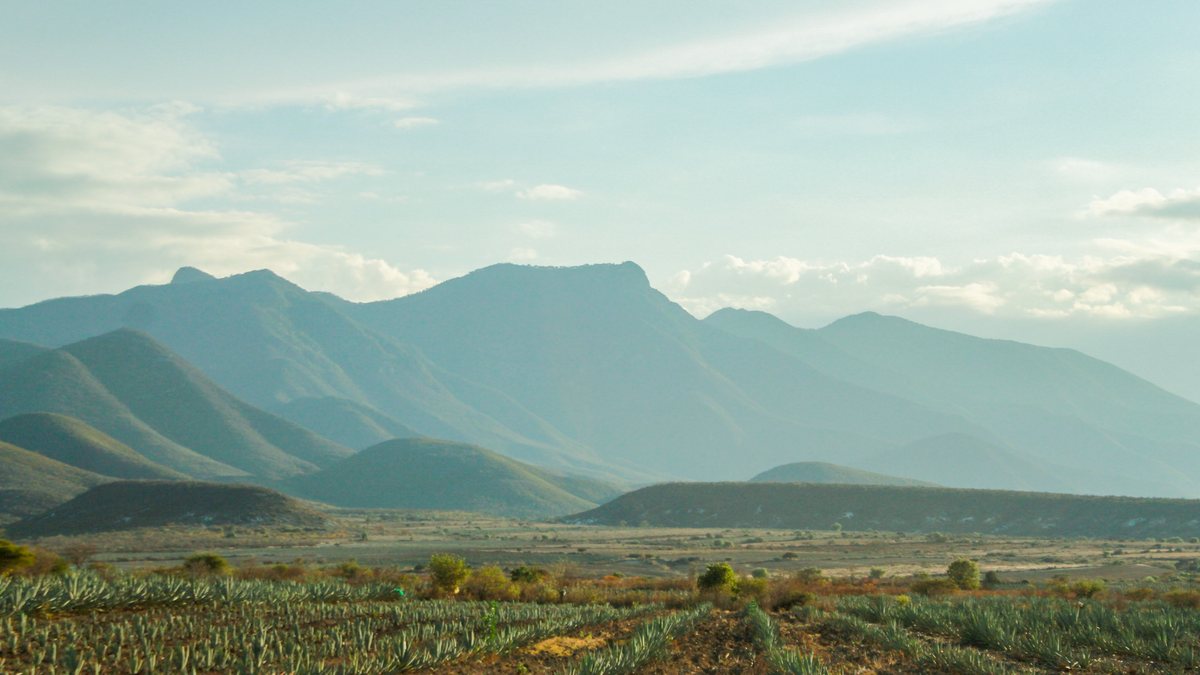
In the first post of this series we said mezcal can be made from more than forty kinds of agave. In practice, one agave fills most of the bottles: espadín. If you have had a mezcal at a bar, it was almost certainly espadín. So that is where we start.
What espadín is
Espadín is Agave angustifolia, a tall agave with long, narrow, sword-like leaves. That is where the name comes from: espada is Spanish for sword. It grows well in the valleys of Oaxaca, the state that makes most of the world's mezcal.
It is also family. Researchers think wild Agave angustifolia from Jalisco is a close relative, and likely the wild ancestor, of the blue agave used for tequila. So espadín and tequila's agave are cousins, which fits the saying from our first post: all tequila is mezcal, but not all mezcal is tequila.
Why most mezcal is espadín
The numbers tell the story. According to the figures from the mezcal regulator for 2024, about 85% of all agave used for mezcal was espadín. Three things make it the workhorse:
- It can be farmed. Espadín grows from the little pups that sprout around the mother plant, as well as from seed, so farmers can plant it in rows like any other crop.
- It is relatively quick. A planted espadín is ready in about 6 to 10 years. That sounds slow, but many wild agaves take far longer.
- It is sweet. Espadín hearts carry a lot of sugar, so each plant gives more spirit than most wild agaves do.
That is why espadín mezcals are usually the friendliest price on the shelf, and why they are the best place to begin.
What it tastes like
A good espadín is approachable: cooked agave sweetness, citrus and tropical fruit, a little black pepper, and smoke from the pit roast. How much smoke depends on the maker. Some roast longer and harder. Others keep it light so the fruit shows.
Here is the part most people miss. Because almost every brand makes an espadín, it is the best way to taste the difference a maker makes. Same plant, different village, different oven, different still, and the glass tastes different.
Espadín on our shelf
- 400 Conejos Joven and Xicaru Silver come from Santiago Matatlán, the town that calls itself the world capital of mezcal. Both are easy first steps.
- Ilegal Joven is a smooth, lightly smoky espadín that works in cocktails as well as on its own.
- Del Maguey Vida comes from the village of San Luis del Río. It is roasted and distilled over wood the traditional way, and it is a favorite with bartenders.
- Fidencio Clásico is estate-grown espadín with a clear, roasted-over-oak smoke.
- Mezcal Vago bottles each maker's batch with his name on the label. Our shelf has the espadín by Emigdio Jarquín from Miahuatlán, and El Manantial, an espadín made with spring water by the Barriga family.
How to taste one
Pour a small amount into a small glass, let it sit for a minute, and sip it slowly. Try two espadíns side by side, for example Xicaru Silver next to Del Maguey Vida, and notice how different the same agave can taste.
Next in the series: the wild agaves, and why a bottle of tobalá costs more than a bottle of espadín.
On our shelf right now
Online prices, read from our own inventory when this page was built.