
Walk down our tequila aisle and the mezcal sits right next to it. Most people know mezcal is "the smoky one." Fewer know that tequila and mezcal are the same family, and that there are more agave spirits than either name.
Mezcal is the family, tequila is one member
The word mezcal comes from the Nahuatl word for cooked agave. For centuries, almost any spirit distilled from cooked agave in Mexico was called mezcal. The one made around the town of Tequila, in Jalisco, was sold as "vino mezcal de Tequila," and in time it simply became tequila.
So in the everyday sense, all tequila is mezcal. Legally, today they are two separate appellations with their own rules, and a bottle cannot be labeled as both. That is where the saying comes from: all tequila is mezcal, but not all mezcal is tequila.
What makes a tequila a tequila
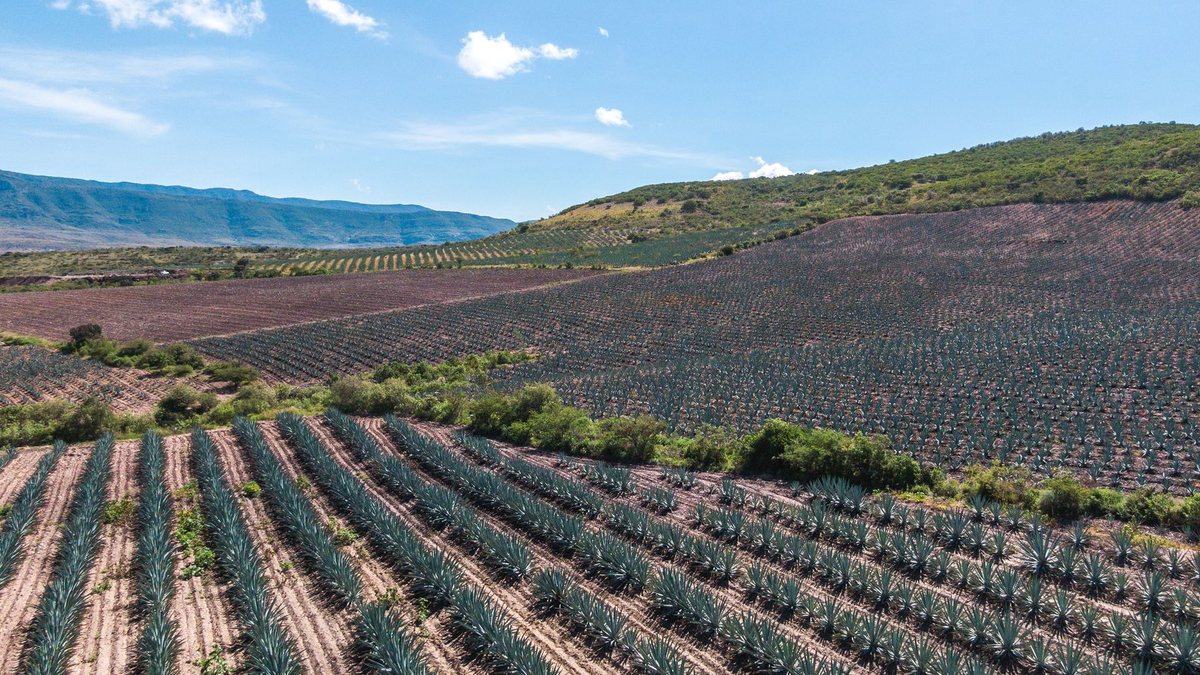
- One plant. Tequila can only be made from blue Weber agave.
- One region. All of Jalisco, plus parts of Guanajuato, Michoacán, Nayarit and Tamaulipas.
- Two kinds. A bottle that says "100% de agave" is made only from agave. Plain "tequila" can be as little as 51% agave, with other sugars making up the rest.
- Usually steam-cooked. Most tequila agave is cooked in ovens or autoclaves, which gives a cleaner, sweeter agave taste with no smoke.
A good example on our shelf is La Gritona Reposado, a 100% agave tequila from a woman-led distillery in the Jalisco Highlands.
What makes a mezcal a mezcal
- Many plants. Mezcal can be made from more than forty kinds of agave, not just one.
- More places. The mezcal appellation covers Oaxaca, where most mezcal is made, and a group of other states including Guerrero, Durango, San Luis Potosí, Zacatecas, Guanajuato, Michoacán, Puebla and Tamaulipas.
- The smoke. Traditional mezcal agave is roasted in pits in the ground over wood and stones. That is where the smoky taste comes from.
- Three legal categories. "Mezcal" can use modern equipment. "Mezcal artesanal" keeps the pit roast and natural fermentation. "Mezcal ancestral" goes further and must be distilled in clay pots over a wood fire.
The agaves you will meet
- Espadín. The most common mezcal agave, and a farmed one. Start here. 400 Conejos Joven, Xicaru Silver and Ilegal Joven are all espadín.
- Tobalá. A small wild agave that grows slowly and yields little, which is why it costs more. Try Xicaru Tobalá.
- Cenizo. A wild agave from Durango, with a drier, more mineral taste. Try Bozal Cenizo.
- Cupreata and arroqueño. Two more wild or semi-wild agaves that take many years to mature. We carry small amounts, so ask at the counter.
- Ensamble. A blend of several agaves in one bottle, the way a winemaker blends grapes.
The cousins: raicilla, bacanora and sotol
Raicilla is Jalisco's other agave spirit, made in the mountains and along the coast. It got its own appellation in 2019, covering 16 towns in Jalisco and one in Nayarit. We carry La Reina Raicilla Artesanal.
Bacanora comes from Sonora and may only be made from one agave, Agave angustifolia. It has had its own appellation since 2000.
Sotol is the surprise: it is not an agave spirit at all. It is made from the desert spoon plant, Dasylirion, in Chihuahua, Coahuila and Durango. It sits beside mezcal on most shelves because it is made in a very similar way.
How to start exploring
Try them in order. Start with an espadín joven, then a wild agave like tobalá or cenizo, then a raicilla. Pour a small amount into a small glass at room temperature and sip it slowly. Mezcal is traditionally sipped, not shot, and you will taste far more that way.
This is the first post in a series. Next we go agave by agave, starting with espadín, then the wild agaves, raicilla, ensambles, pechuga and mezcal from each state.
On our shelf right now
Online prices, read from our own inventory when this page was built.